
Discovering the Far North and Highlands from Inverness
North and west of Inverness, the Highlands open into a different kind of scenery altogether – sea cliffs, ancient sea caves, ruined coastal strongholds, and lochs, glens and mountains that look more like sculpture than landscape. This is Caithness, Sutherland and Wester Ross: a panorama of everything Scotland is famous for, all within a few days driving of the city.
Much of this ground is covered by the North Coast 500 route, and there's no shortage of operators offering to drive you round it. What follows here is not the full circuit, but my own selection of sites along this route that I like to stop at. For those wanting to explore the route with me, I offer a dedicated 5 Day Far North and Highlands Private Tour from Inverness, covering many of the sites below at a deliberately slower pace.
Places I like to visit around Caithness, Sutherland and Wester Ross
- Dornoch: A picturesque cathedral town on the Dornoch Firth, with a medieval sandstone cathedral and a quiet, historic town centre.
- Dunrobin Castle: The largest and grandest castle in the Highlands, with formal gardens overlooking the Dornoch Firth.
- Carn Liath Broch: A well-preserved, two-thousand-year-old Iron Age broch, its drystone walls still standing to a remarkable height.
- Whaligoe Steps: 365 hand-cut stone steps descending a dramatic cliff face to a hidden harbour below.
- Castle Sinclair Girnigoe: The dramatic clifftop ruin of the Earls of Caithness, perched on a narrow headland above the North Sea near Wick.
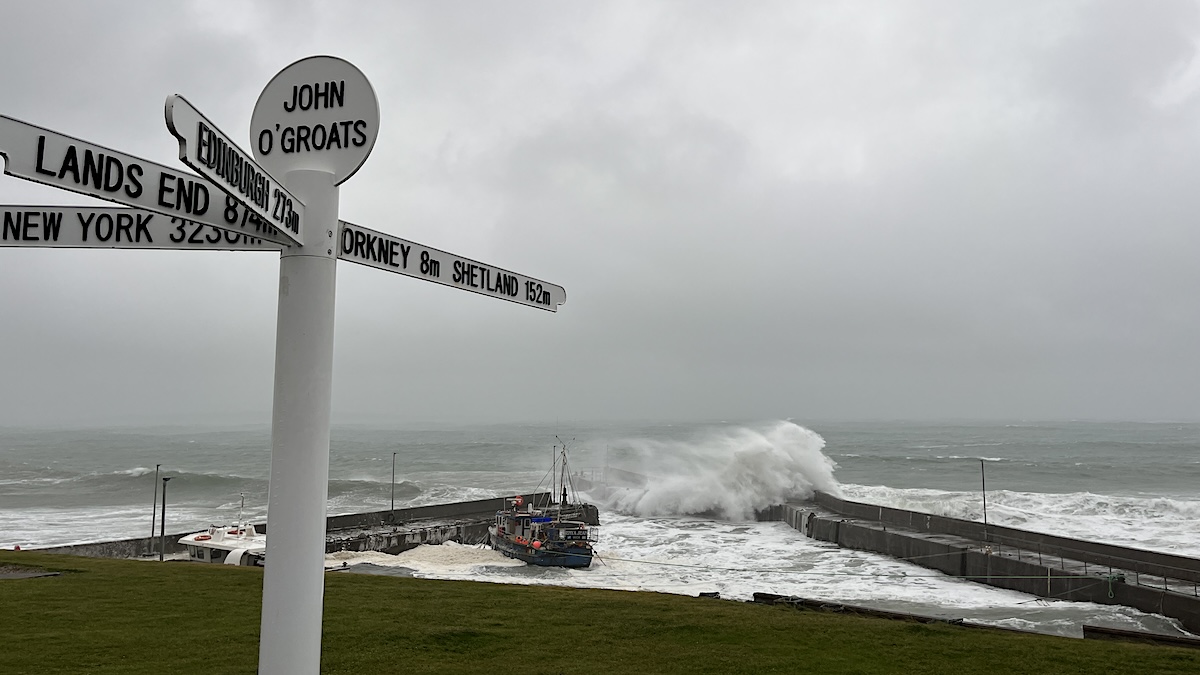
- John o' Groats: The traditional "end of the road" from Land's End, with views out across the Pentland Firth to Orkney.
- Dunnet Head: The true northernmost point of mainland Scotland, with a lighthouse and sweeping coastal views.
- Tongue: A small Highland village, in the heart of Clan Mackay territory, framed by the mountains of Ben Loyal and Ben Hope.
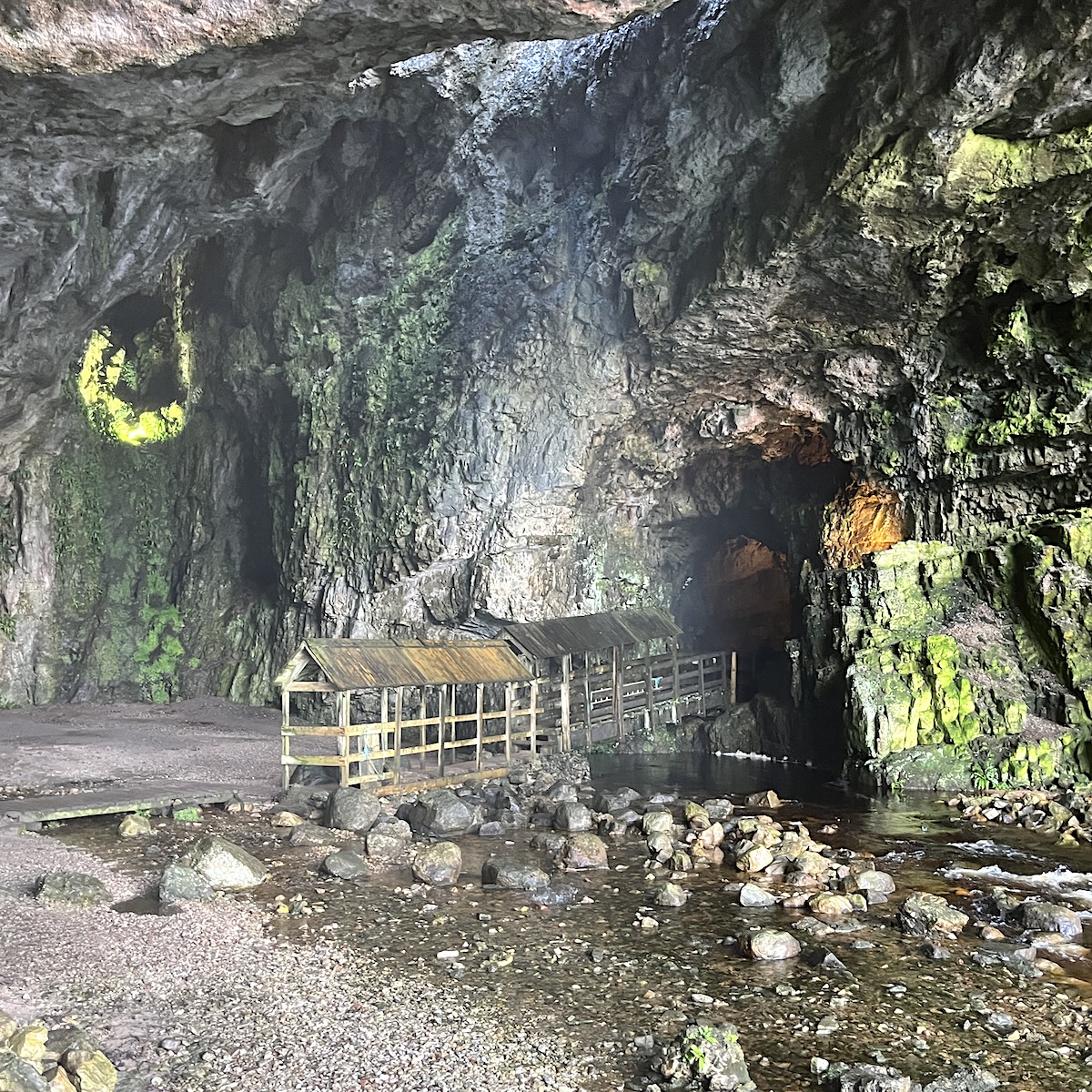
- Smoo Cave: One of the largest sea caves in Scotland, cut into the limestone at Durness, with a waterfall dropping into its inner chamber.
- Ardvreck Castle: The evocative ruin of a Clan Macleod stronghold on the shores of Loch Assynt, framed by some of the oldest mountains in Europe.
- Knockan Crag: A National Nature Reserve where the visible rock strata transformed our understanding of how mountains form, with a short trail and views over the Coigach and Assynt hills.
- Corrieshalloch Gorge: A mile-long box canyon crossed by a Victorian suspension bridge, with the Falls of Measach dropping forty-five metres below.
- Gruinard Bay: A sweep of pink sand and turquoise water, with views out toward the Summer Isles.
- Inverewe Garden: A sub-tropical garden at 58 degrees north, made possible by the Gulf Stream, on a peninsula in Loch Ewe.
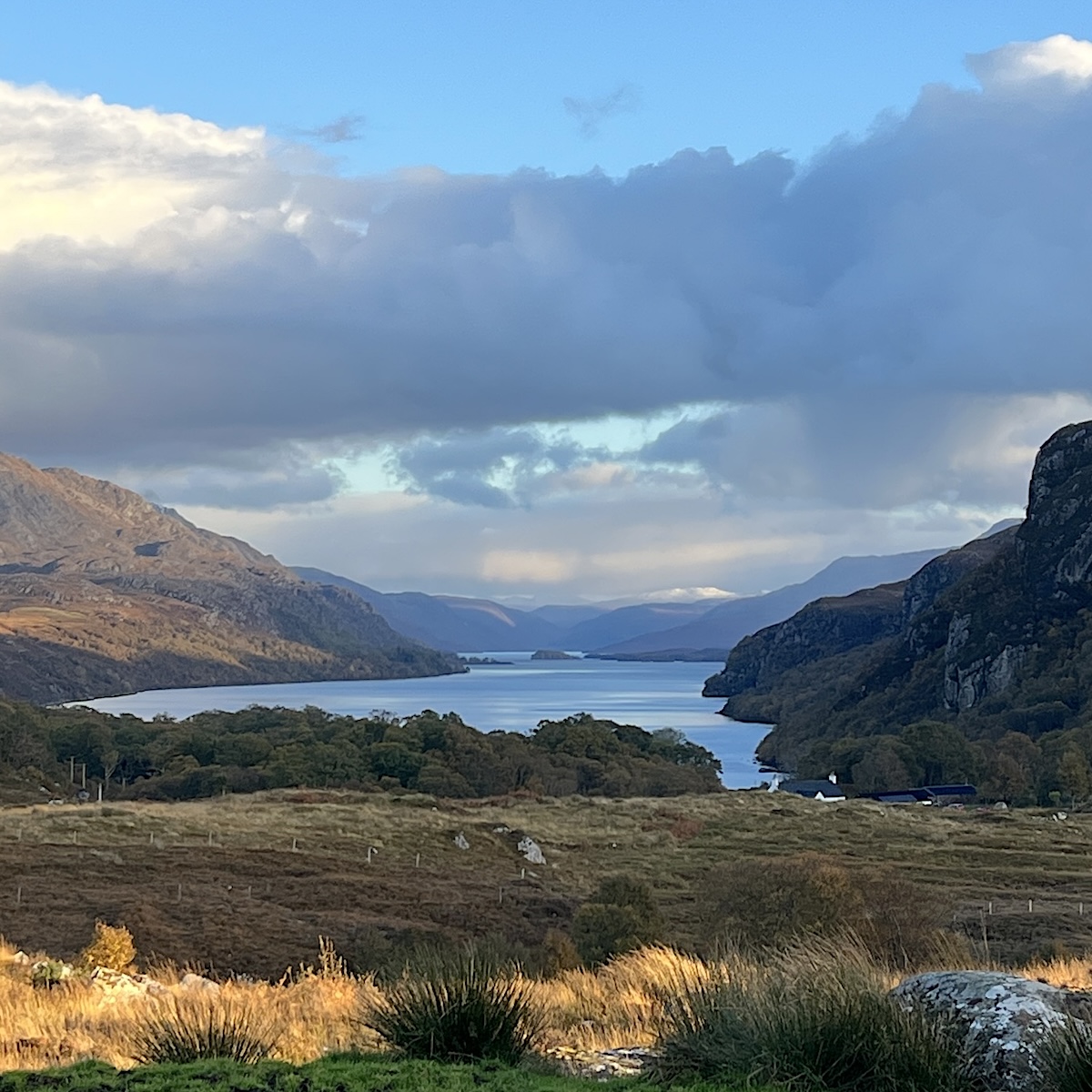
- Loch Maree: One of Scotland's most beautiful lochs, dotted with ancient pine-covered islands beneath the slopes of Slioch.
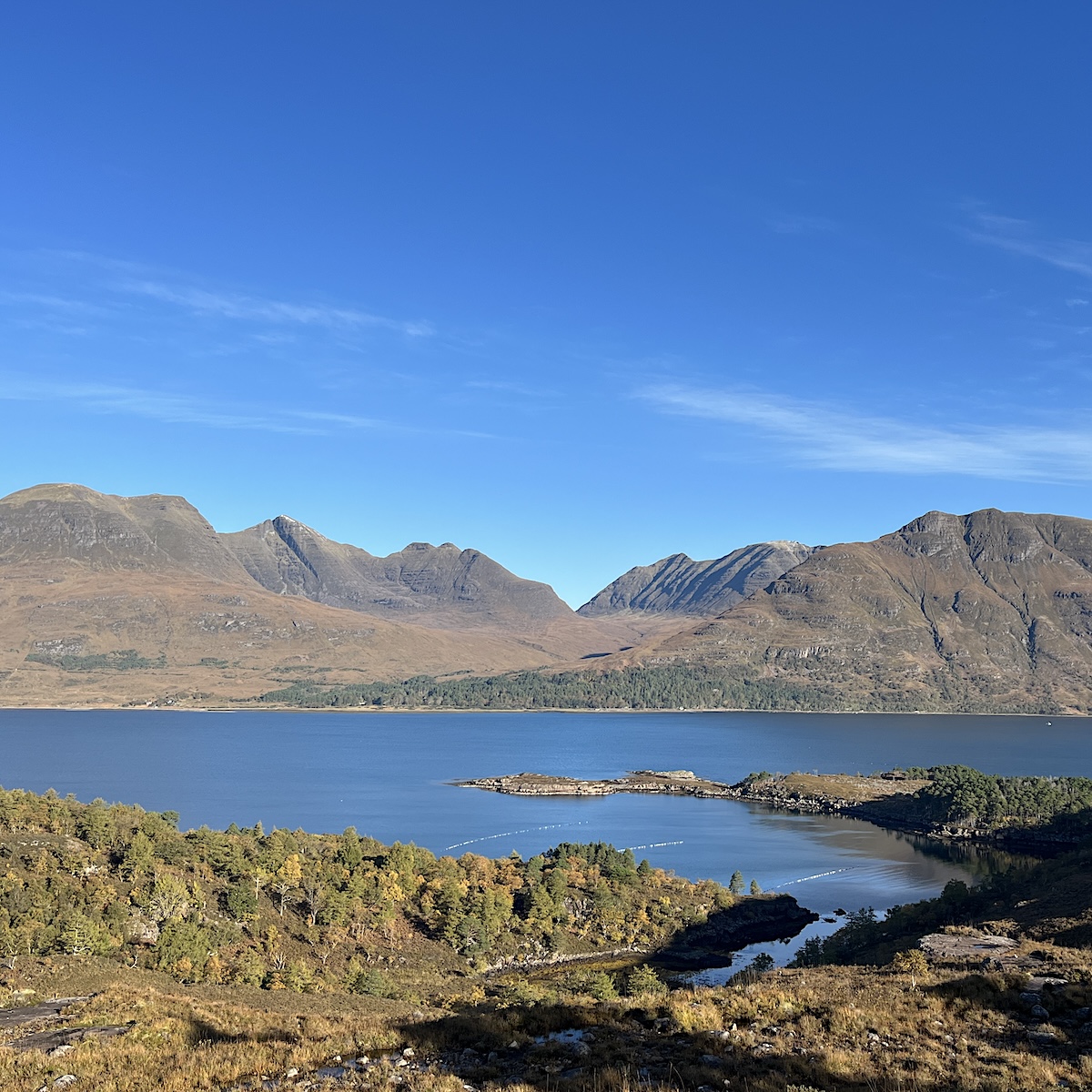
- Torridon: Among the oldest mountains on Earth, rising almost sheer from sea level in dramatic isolation.
- Shieldaig: A pocket-sized fishing village on Loch Torridon, with a pine-covered island just offshore.
A few honest notes...
This route is genuinely one of the most spectacular drives in Scotland, but a few honest considerations are worth knowing before you book.
This is a tour that moves every night, with four different overnight stops across five days. The slower pace built into the itinerary, with no earlier than a 9am start and most afternoons finishing by 4 or 5pm, keeps things comfortable, but it's still worth knowing in advance.
The route has also become considerably busier in the summer months, particularly with motorhomes and self-drive traffic tackling the North Coast 500 at their own pace, so there can be more traffic than expected on some of the single-track sections.
Many of the smaller hotels and guesthouses along the route now request a minimum two-night stay in the peak summer months, which can make accommodation options during that time more limited. Early booking genuinely pays off here.
None of this takes away from what an incredible journey this is. Summer is a fantastic time to see the Far North in full bloom with its long evenings, though spring and autumn offer a quieter alternative with calmer roads and a gentler pace. Whichever season you choose, it remains one of the most breathtaking routes in Scotland and an absolute joy to guide.
How to explore the Far North and Highlands
All of the locations listed above can be explored independently by car – with only light walking required to reach most sites – if you have the time to plan the logistics and do not mind long single-track sections of road. Additionally, several tour operators also offer small-group tours covering the North Coast 500 route.
However, if you prefer a curated private tour, I offer a dedicated 5 Day Far North and Highlands Private Tour from Inverness – a special themed tour covering most of the sites above, following the coastline from Caithness right through to Wester Ross, at a deliberately slower pace.
5 Day Far North and Highlands Private Tour
(Available from April to October)
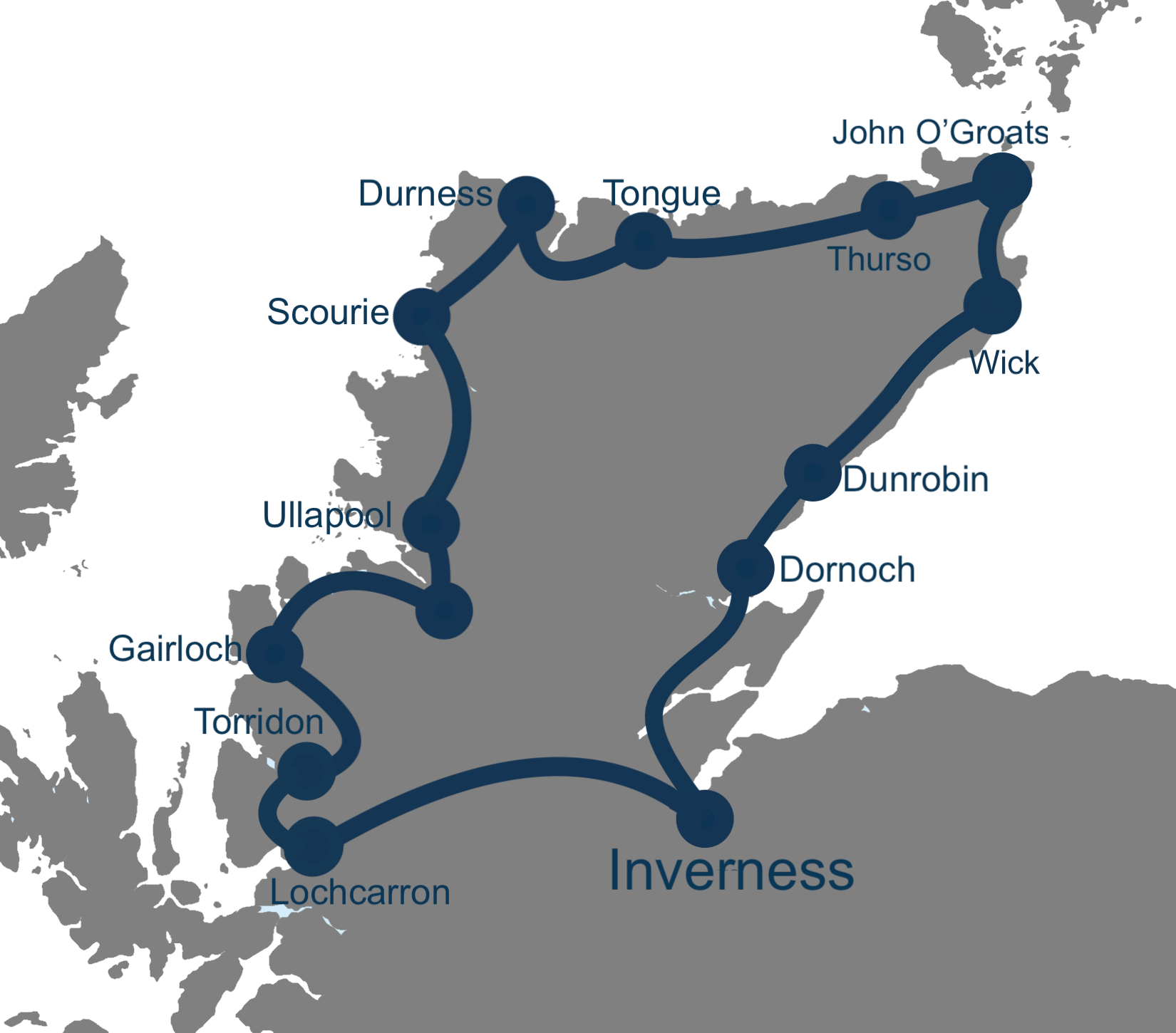
- Day 1: Inverness to Wick — Departing Inverness, we travel north across the three firths – the Beauly, Cromarty and Dornoch – pausing in the picturesque cathedral town of Dornoch with its medieval sandstone cathedral and quiet historic centre. The afternoon takes us to Dunrobin Castle, the largest and grandest castle in the Highlands, with formal gardens overlooking the Dornoch Firth. Along the way we stop at Carn Liath Broch, a remarkably preserved two thousand year old Iron Age roundhouse, before continuing north to Wick, our base for the night.
- Day 2: Wick to Tongue — From Wick, we explore the dramatic clifftop ruin of Castle Sinclair Girnigoe, ancestral stronghold of the Earls of Caithness, perched on a narrow headland above the North Sea. We continue to John o' Groats, the traditional 'end of the road' from Land's End, with views out across the Pentland Firth to Orkney, pausing nearby at the Duncansby sea stacks. The afternoon takes us to Dunnet Head, the true northernmost point of mainland Scotland, before a scenic drive along the northern coast road to Tongue, in the heart of Clan Mackay territory, for our overnight stay.
- Day 3: Tongue to Ullapool — Departing Tongue, framed by the mountains of Ben Loyal and Ben Hope, we travel west to Smoo Cave at Durness, one of the largest sea caves in Scotland, cut into limestone with a waterfall dropping into its inner chamber. Our route continues through the wild scenery of Assynt, among the oldest mountains in Europe, to the evocative ruin of Ardvreck Castle on the shores of Loch Assynt, once a stronghold of Clan Macleod. We pause at Knockan Crag, where the visible rock strata transformed our understanding of how mountains form, before arriving in the harbour town of Ullapool for our overnight stay.
- Day 4: Ullapool to Gairloch — Our most relaxed day, leaving Ullapool we visit Corrieshalloch Gorge, a mile-long box canyon crossed by a Victorian suspension bridge, with the Falls of Measach dropping forty-five metres below. We continue along the coast to Gruinard Bay, a sweep of pink sand and turquoise water with views out toward the Summer Isles, before arriving at Inverewe Garden at Poolewe – a sub-tropical garden made possible by the Gulf Stream, remarkable this far north. We conclude the day with a short drive to Gairloch, our base for the night.
- Day 5: Gairloch to Inverness — On our final day, we travel along the shores of Loch Maree, one of Scotland's most beautiful lochs (and my favourite), dotted with ancient pine-covered islands beneath the slopes of Slioch. Our route continues through Glen Torridon, among the oldest mountains on Earth, rising almost sheer from sea level, with a stop at the pocket-sized fishing village of Shieldaig on Loch Torridon. The afternoon takes us back east through Lochcarron on our return journey to Inverness.
Private Tour Price (per tour)
April to October: £4200
Depart Inverness
Return Inverness
(5 Days)
Depart Inverness
Return Inverness
(5 Days)
What's Included
What's included in the tour price?
Tours are exclusively for your private group only (up to 3 persons) and prices are per tour. I only offer private tours and do not combine individuals or separate groups – if your private group size is less than 3 the advertised tour price still applies. Your private tour price includes:
- Private tour for your group only (1, 2 or 3 persons)
- An experienced driver-guide and historian (John Alasdair Macdonald)
- A comfortable tour vehicle with good visibility and generous legroom
- All taxes and fees
What's excluded?
The tour price does not include your accommodation costs, entrance fees, meals and refreshments.
Where should I book accommodation?
To make the most of your tour I recommend you book accommodation in:
- Wick (Day 1)
- Tongue (Day 2)
- Ullapool (Day 3)
- Gairloch (Day 4)
Whilst I do not book accommodation directly, I am always happy to offer advice on where to stay and eat. Your tour quote will include a full list of recommended accommodation options for every overnight location along with suggestions for evening meals.
Route & Logistics
Where does the tour start from?
Enjoy the ease of a private pickup – I will meet you directly at your Inverness accommodation on the morning of Day 1 to begin the tour. At the end of the tour I will drop you off at your preferred Inverness location.
Can the tour itinerary be customised?
The tour itinerary is based on nineteen years of guiding experience, previous client feedback, and practical travel timings. However, there is some flexibility and the itinerary can often be adapted in advance to suit particular interests or requests where possible. Please mention any requests in the 'Extra Information' section when completing a Tour Enquiry Form.
Can I add a history day extension from Inverness?
For those who would like an extra day of history from Inverness, I offer a private History Day Tour Extension covering Culloden Battlefield, Clava Cairns, Sueno's Stone, Elgin Cathedral (or Pluscarden Abbey) and the Rodney Pictish Stone. It is only available as an add-on to a multi-day tour booking — please request it in the 'Extra Information' section when completing a Tour Enquiry Form.
Does this tour cover the full North Coast 500?
Not quite by design. I leave out the Stoer and Applecross peninsulas deliberately, both of which add significant time on the busiest single-track sections of the route. That keeps daily driving distances short and leaves more time out of the vehicle at each stop, rather than a full circuit squeezed into five days – with no earlier than a 9am start, and typically at our accommodation by 4 or 5pm for a proper, relaxed evening.
Comfort & Practicalities
How much walking does this tour involve?
Most stops on this route are short walks from the vehicle to a viewpoint, castle or historic site. The pace is relaxed and there is plenty of time to enjoy each stop. If you would prefer to skip a particular walk or explore at your own pace, that is absolutely fine on a private tour.
How often do we stop?
The tour has plenty of viewpoint, photo and refreshment stops along with regular restroom stops. As it is a private tour, we can pretty much stop whenever you want!
What clothing/footwear should I bring?
Walking shoes or sneakers with good grip is recommended, along with a light waterproof jacket as Highland weather can be very changeable. All walks are entirely optional and can be tailored to your comfort and mobility level.
How much luggage can I bring?
The current tour vehicle comfortably accommodates up to three passengers with room in the rear boot (trunk) for one medium bag/suitcase per person and one small day bag/backpack per person. If you are unsure about luggage capacity, please let me know the size of your cases and I can confirm there is room.
Do you help with the luggage?
I am happy to help with your suitcases at each overnight location – some of the smaller hotels around the Highlands and Islands do not have lifts but I will gladly assist in getting your bags to your room.
Booking & Availability
How far in advance should I book?
I recommend booking this tour as early as possible. Touring the Far North and West of Scotland is a popular activity and accommodation often books up 12 months in advance. Securing your tour dates and your accommodation early ensures you get the widest choice of rooms and rates, whereas booking late often means limited availability – I take bookings up to 18 months in advance.
What are the deposit and payment terms?
A 50% non-refundable deposit is required to secure your dates, with full payment due 60 days before the tour start date. Deposit and balance payments are made securely online and accept Visa, MasterCard and American Express. Full details are available in my Terms and Conditions.
How do I book the tour?
The first step is simply to complete a Tour Enquiry Form with your preferred travel dates. I will then reply with availability and a detailed tour quotation (with absolutely no obligation to proceed at this stage). I usually reply to enquiries within 24 hours.
Can I just chat about the tour before booking?
Of course! You can reach me in whichever way is easiest for you:
- Complete a Tour Enquiry Form – just ask any questions in the 'Extra Information' section.
- Email me directly at info@thehebrideanexplorer.com.
- Send a WhatsApp message or call me on +44 7943 863292.
Do you offer this tour over the winter months?
This 5 day route is one of three Highland itineraries that can be fully adapted into a winter private tour during November, February and March. Read my guide to Winter private tours of the Scottish Highlands to see what to expect.
P.S... This route also makes a fantastic winter tour. I've guided it in rain, hail and snow, with wild wind and stormy coastal seas, and barely seven hours of daylight to work with, and it still remains one of my favourite trips to run. The roads are empty, the scenery is every bit as breathtaking, and for those with an adventurous spirit wishing to see the Highlands in all its wild wintry glory, it's hard to beat. See my Winter private tours of the Scottish Highlands article for more details about touring in November, February and March.